
Bathroom Water Leakage from Hidden
Floor Gully Failure
Engineering Diagnostics | Water Leak Investigation | Villa 210 Dubai

A persistent bathroom water leak caused ceiling damage inside a two-year-old luxury villa despite no visible plumbing defects.
Through systematic water leak investigation, thermal imaging and engineering diagnostics, DCX traced the source to a concealed floor gully failure and restored the drainage connection with minimal disruption to the property.
The Leak That Didn’t Make Sense
When visible symptoms refuse to reveal the true source, engineering investigation becomes the only reliable path to the truth.
Persistent water leakage was visible at the ceiling below the bathroom, yet the source could not be established through conventional visual inspection. No obvious plumbing failure or surface defect could adequately explain the location and behaviour of the moisture damage.
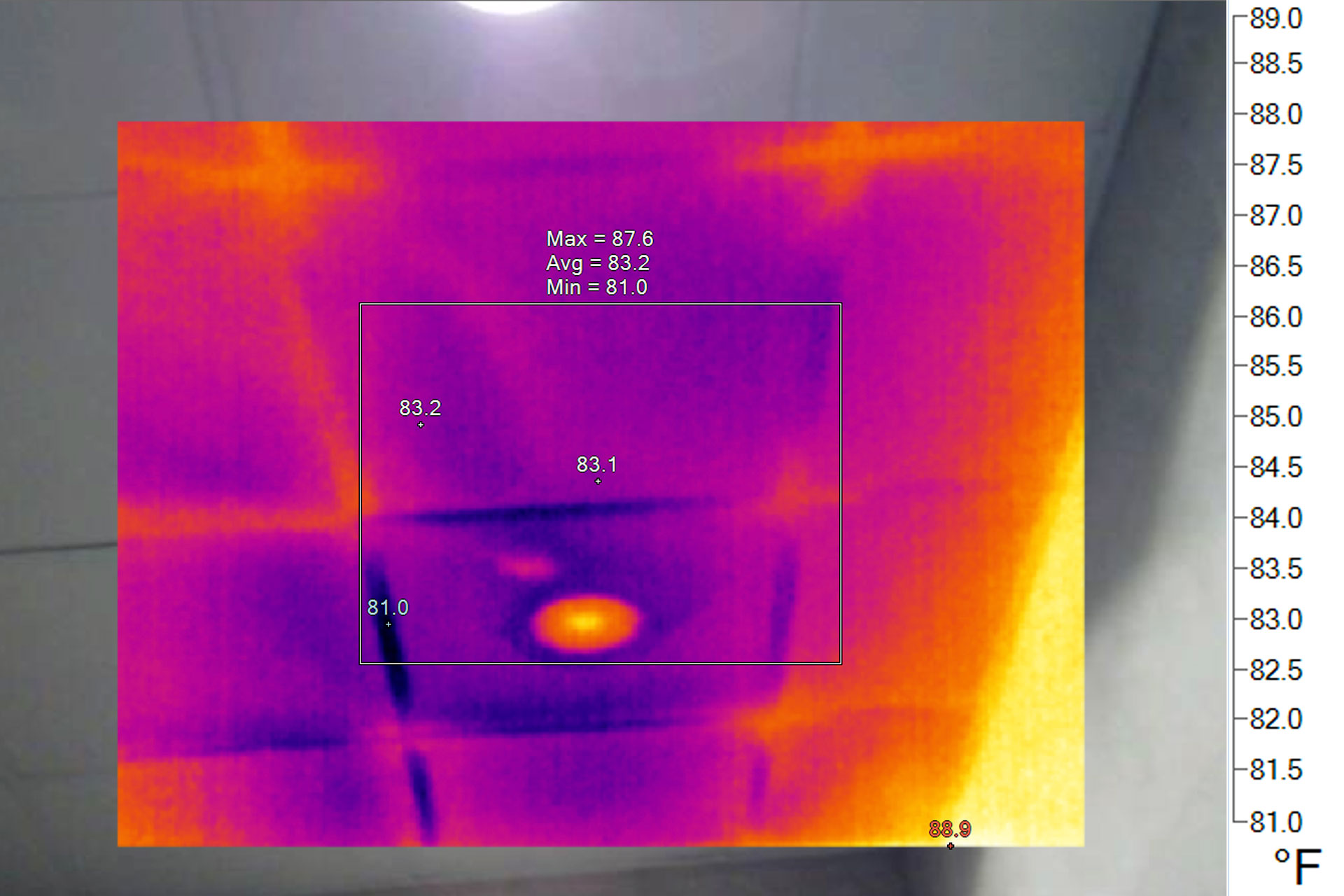
Rather than opening large areas of the bathroom based on assumption, DCX began a systematic water leak investigation using visual assessment, thermal imaging and controlled testing to trace the moisture pathway. The objective was to isolate the actual source before any destructive work or waterproofing repair was undertaken.
Engineering Investigation Process
Rather than opening walls and floors based on assumptions, the investigation followed a controlled process of testing, observation and elimination.
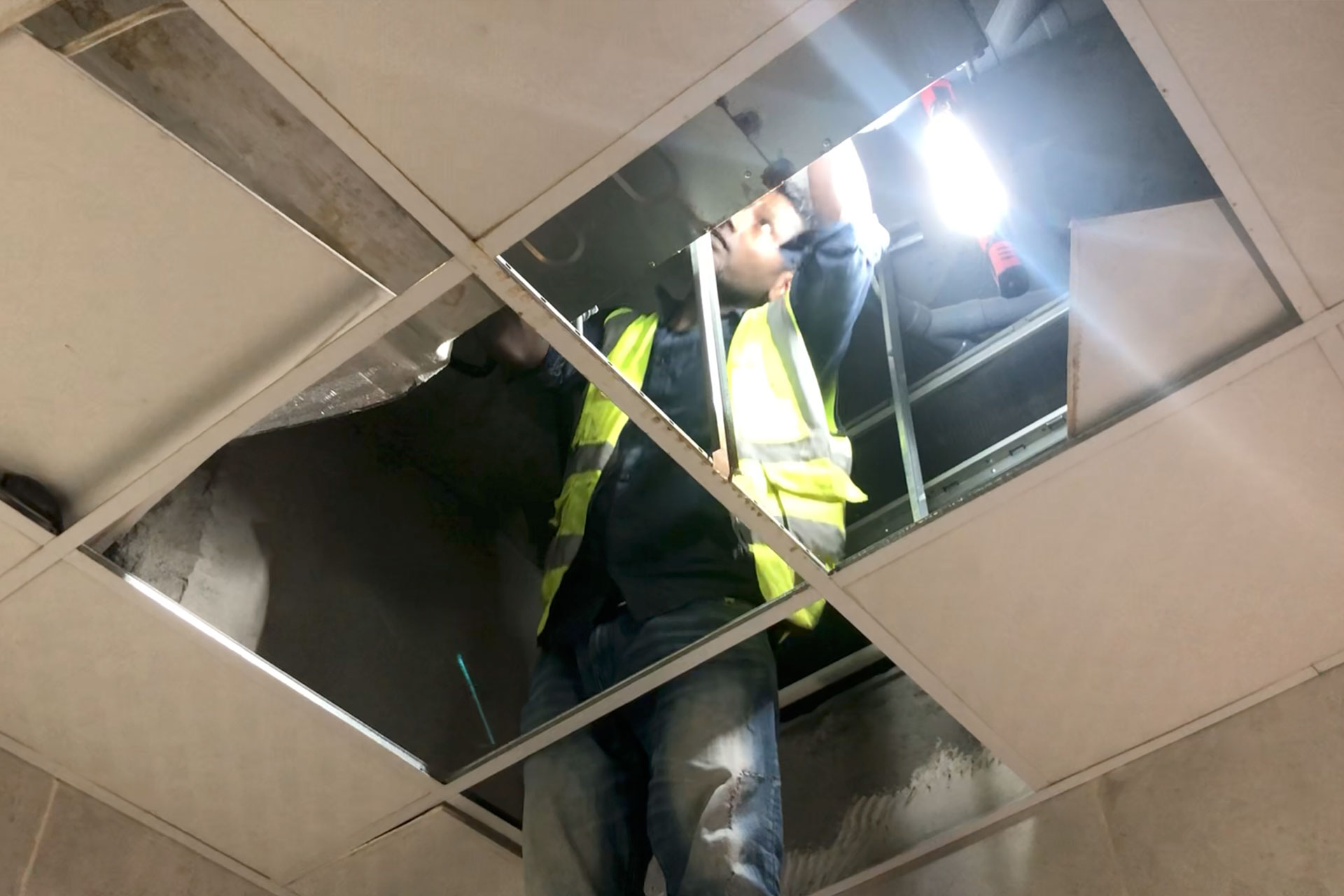
The investigation began by separating the possible sources of water ingress. Plumbing connections, drainage behaviour, waterproofed surfaces and the ceiling void below were examined independently to determine when and under what conditions the leakage appeared.
Controlled water testing was then combined with visual inspection and thermal imaging to compare conditions before, during and after water discharge. Each test was used to eliminate possible causes and progressively narrow the investigation toward the concealed drainage system.
Evidence Collection
The location of visible water damage does not always reveal where the leak actually begins.
Multiple inspections were carried out over several days to observe how the leakage responded under different conditions. DCX monitored bathroom drainage, inspected the ceiling void below, traced moisture migration and compared each observation against the timing and location of water discharge.
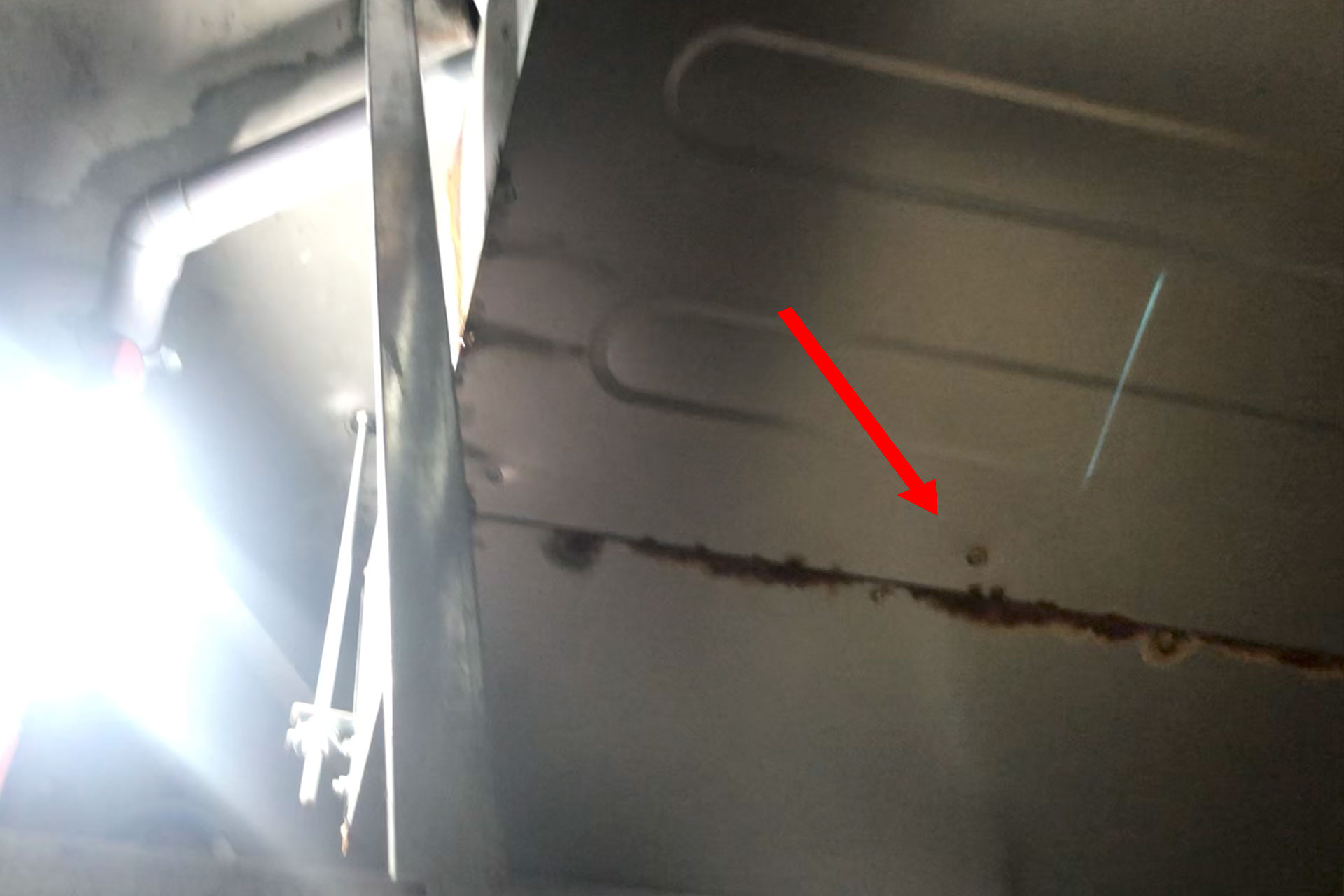
A critical pattern began to emerge: water appearing within the ceiling void correlated with drainage activity from the bathroom above. This evidence allowed the investigation to move away from general waterproofing assumptions and progressively narrow the search toward the concealed floor drainage assembly.
Root Cause Identified
A concealed defect within the floor drainage assembly was allowing wastewater to escape beneath the bathroom finishes.
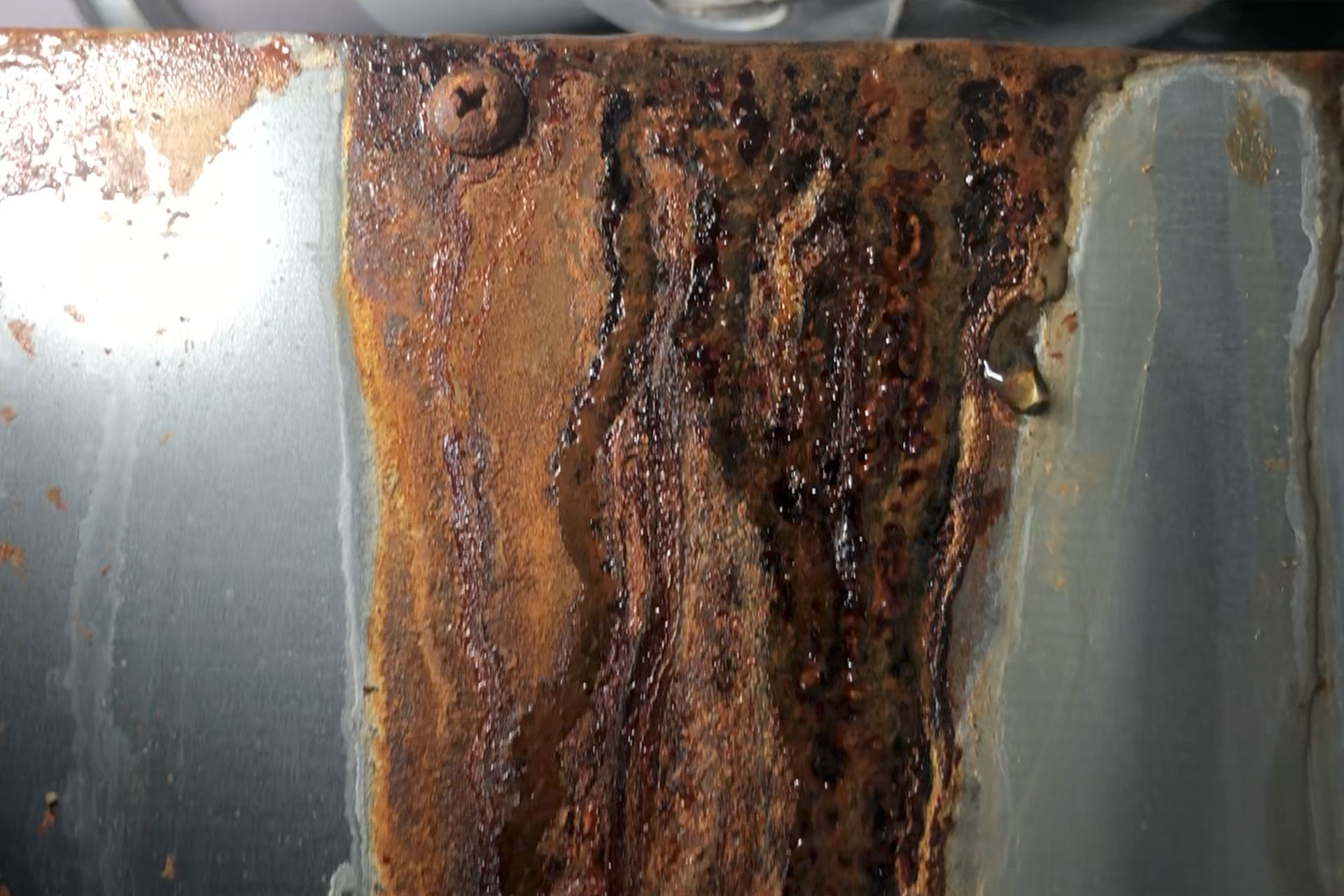
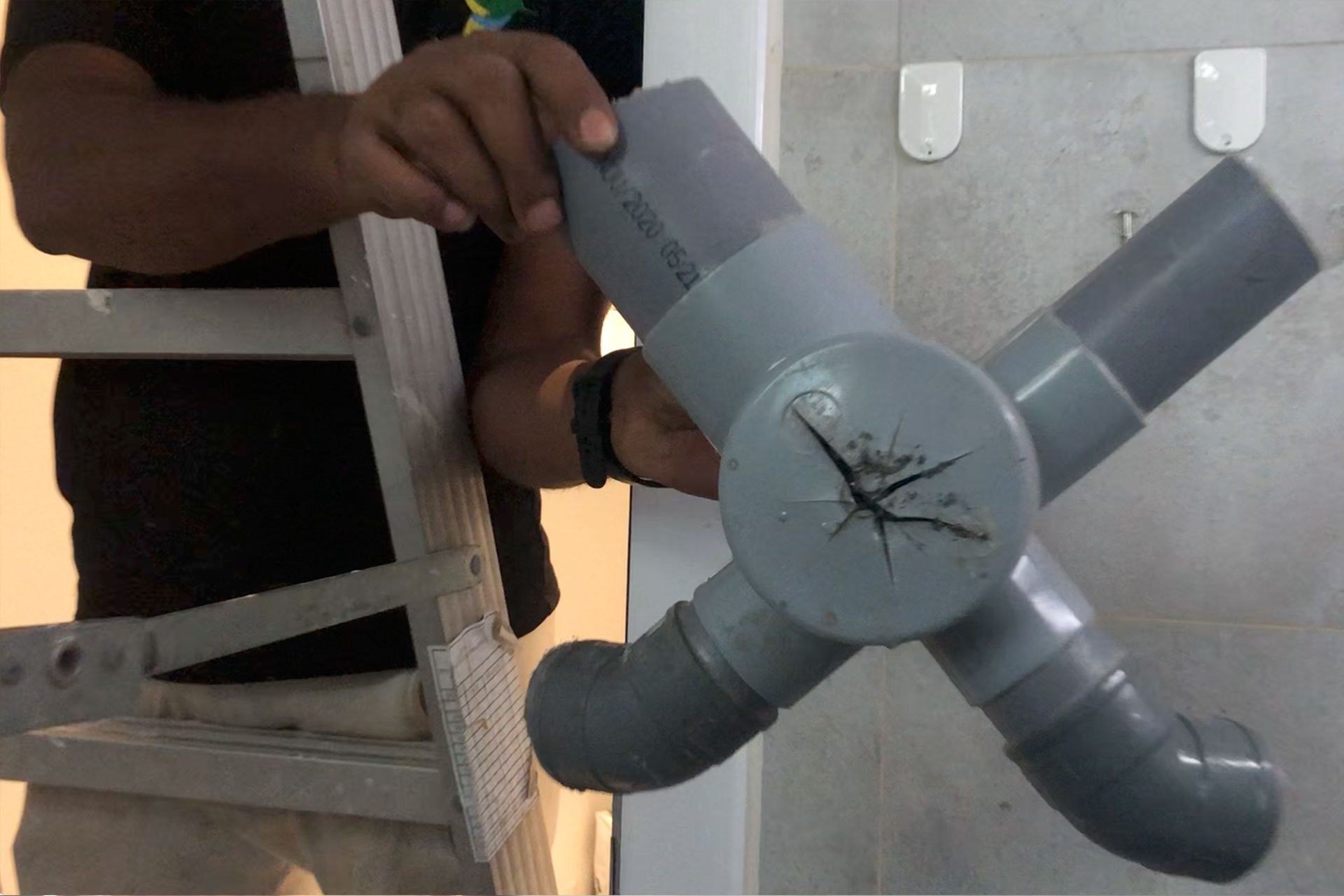
The investigation ultimately identified a cracked floor gully concealed within the bathroom floor assembly. The damaged fitting allowed wastewater to escape during drainage and migrate into the surrounding slab instead of remaining fully contained within the drainage system.
This explained why the bathroom appeared to operate normally while water later emerged through the suspended ceiling below. The drainage line was not blocked; the failure occurred at the concealed gully itself, allowing repeated water migration whenever the bathroom was used.
Engineering Solution
Rectification began only after the failure mechanism and exact defect location had been confirmed.
With the defective floor gully isolated as the source of leakage, the repair strategy focused on removing the failed component while limiting disturbance to the surrounding bathroom finishes and existing drainage network.
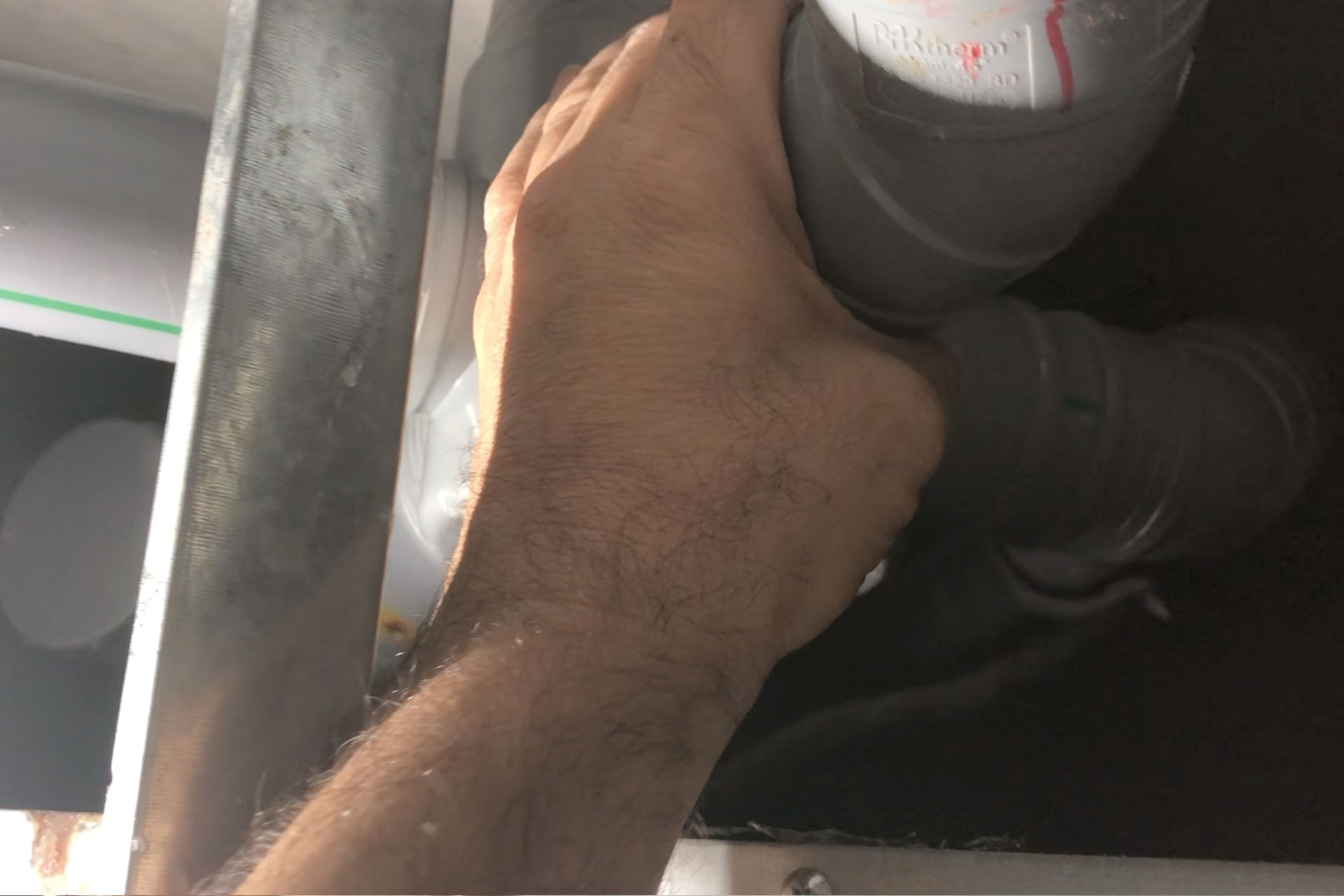
The damaged gully was carefully removed and the surrounding drainage connections inspected before installation of the replacement assembly. Particular attention was given to connection integrity, alignment and sealing to ensure wastewater remained fully contained within the drainage system.
By targeting the confirmed failure point rather than undertaking widespread demolition, the rectification addressed the root cause while preserving as much of the existing bathroom construction as possible.
Verification & Final Testing
Every repair must be proven—not assumed.
Following installation of the new floor gully and reinstatement of the drainage connections, controlled water testing was carried out under operating conditions designed to reproduce the circumstances that had previously triggered the leakage.
Water was discharged through the repaired bathroom drainage system while the pipework, connection points and ceiling void below were continuously inspected. No further water escape or moisture migration was observed during the verification period.
The successful test confirmed both the integrity of the replacement drainage assembly and the original diagnosis. Only after the repaired system had demonstrated leak-free performance was the rectification considered complete.
Engineering Insights From Villa 210
Every successful repair begins with understanding the failure.
This investigation demonstrated why concealed water leakage cannot always be diagnosed from
visible symptoms alone. Correlating drainage behaviour, moisture migration, thermal evidence
and controlled testing allowed DCX to isolate a hidden floor gully failure without
unnecessary widespread demolition.
The findings form part of the wider Villa 210 engineering investigation, where multiple water ingress conditions were diagnosed through evidence-led testing and progressive elimination.
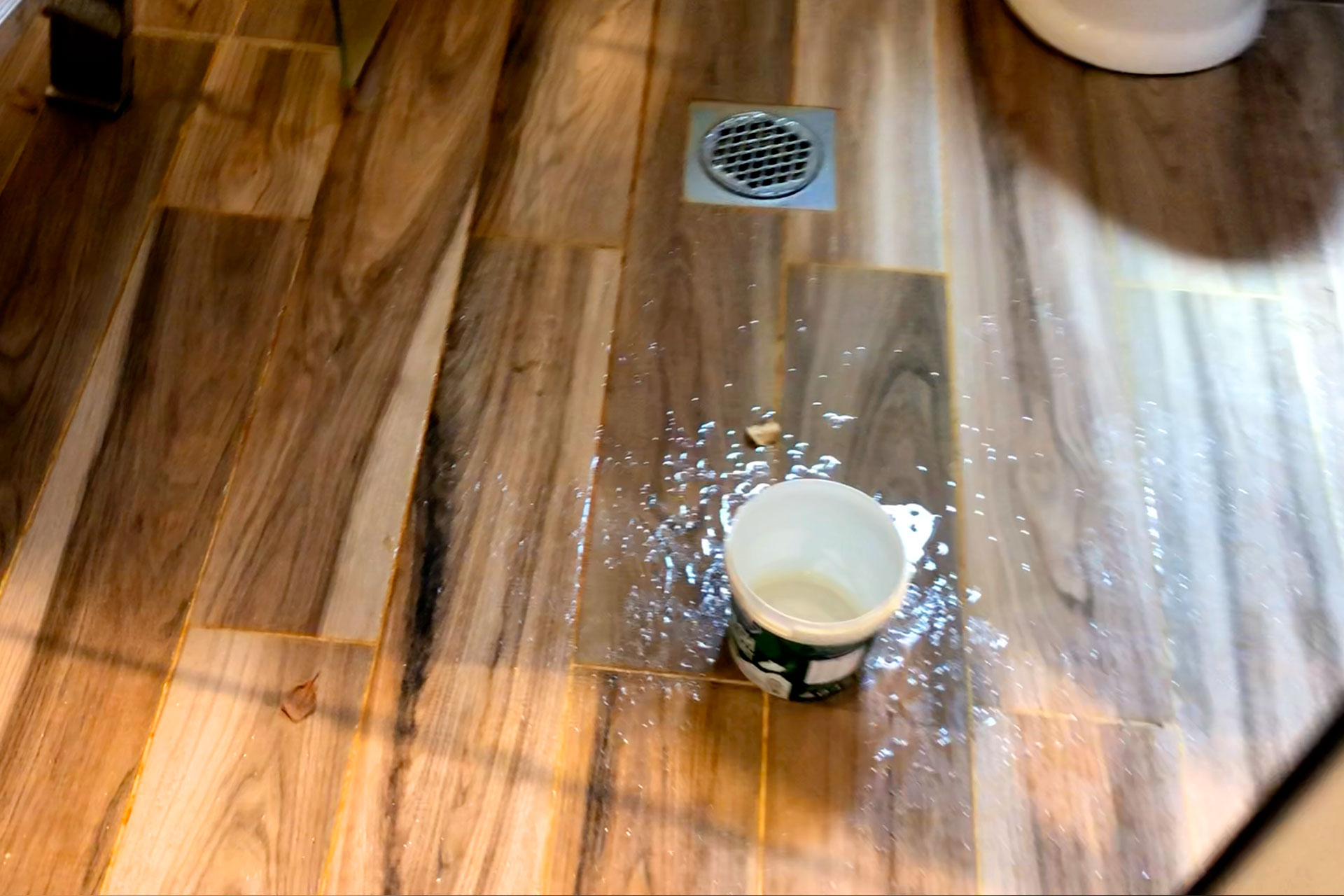
Concealed drainage failures can produce symptoms almost identical to waterproofing defects. Controlled testing and engineering investigation help distinguish the true source before unnecessary demolition or waterproofing replacement begins.
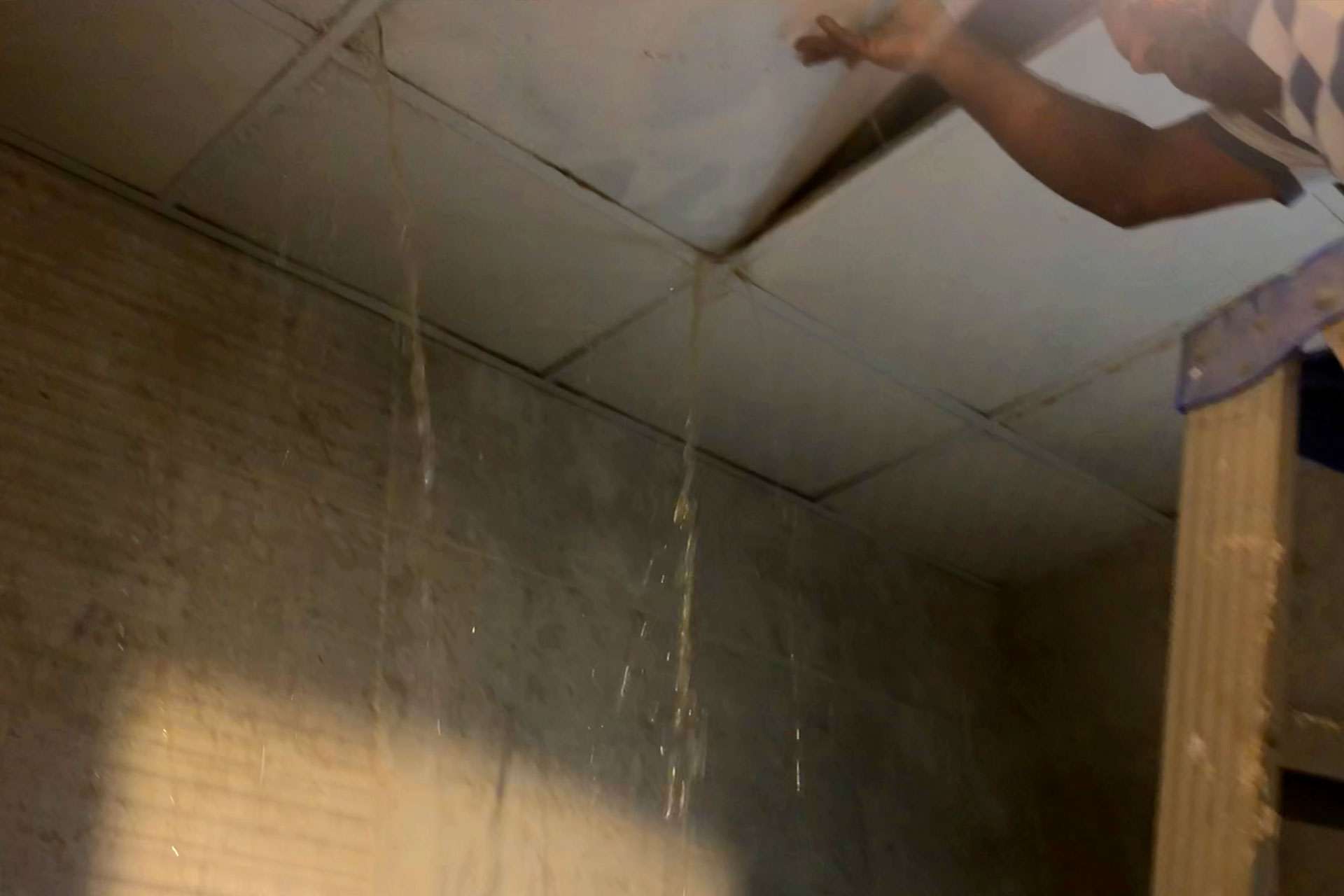
Water escaping from a concealed drainage system can migrate through screed, concrete and hidden cavities before becoming visible far from its original source. Tracing this movement is critical to accurate water leak diagnosis and root cause identification.
Visible staining, dripping and moisture damage reveal symptoms—not necessarily the source. Thermal imaging, controlled water testing and engineering correlation can provide the evidence required to locate concealed water leakage accurately.
Ceiling leakage may originate far from the area where water finally becomes visible. Tracing moisture movement and testing suspected sources helps identify the actual failure point before repair work begins.
Water appearing below a bathroom can originate from drainage fittings, concealed pipework, joints or waterproofing defects. Each possible source should be investigated independently before selecting the repair method.
When a water leak returns after previous repairs, treating the visible damage alone is unlikely to solve the problem. Controlled testing and engineering diagnostics help isolate the concealed defect responsible for recurring leakage.
Every engineering insight published by DCX is derived from real
field investigations, validated observations and documented engineering findings—not theoretical examples.
Explore Similar Engineering Projects
Related Engineering Investigation Projects
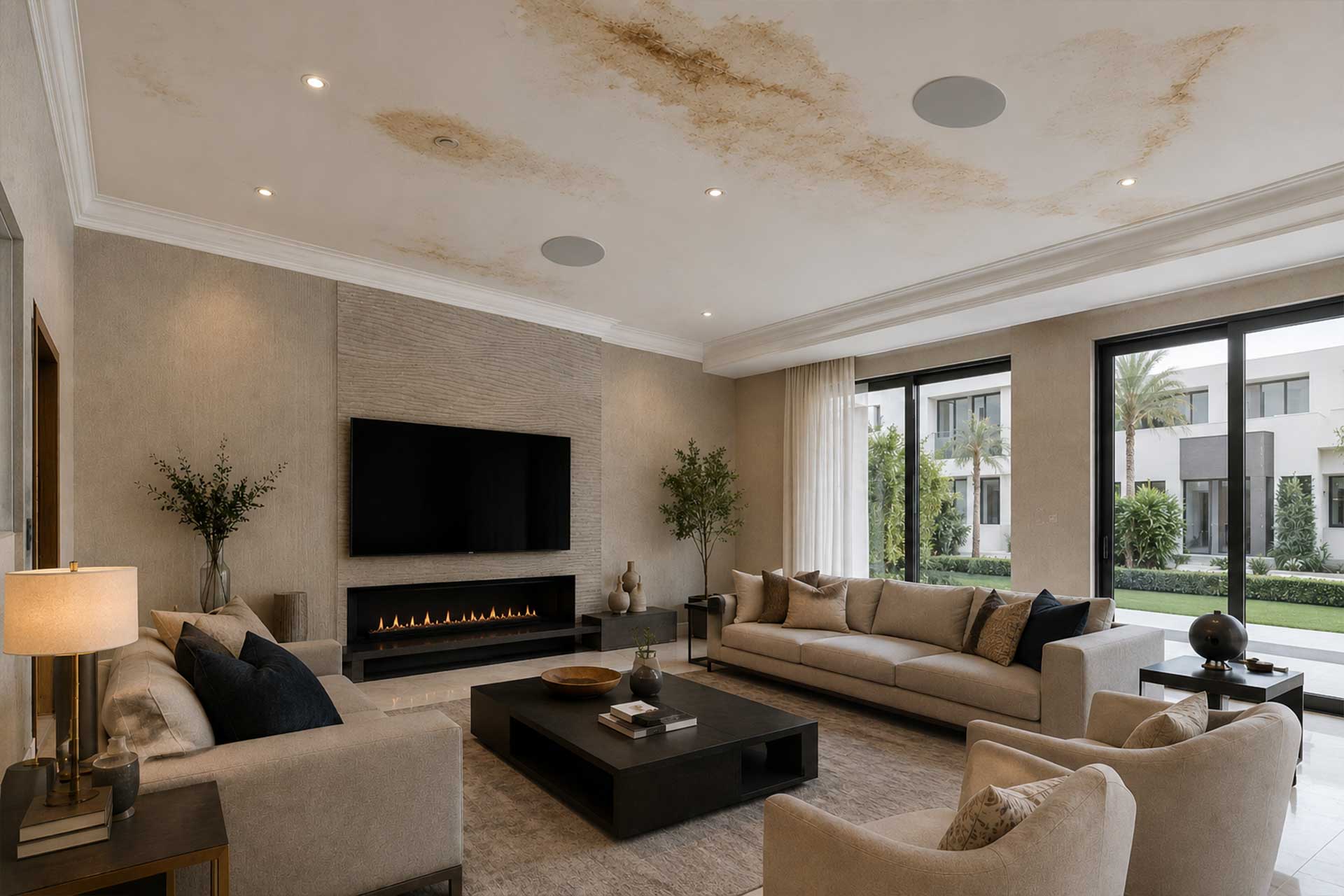
Luxury Villa Roof Leak Investigation
Leak Investigation | Waterproofing Restoration | Flood Testing
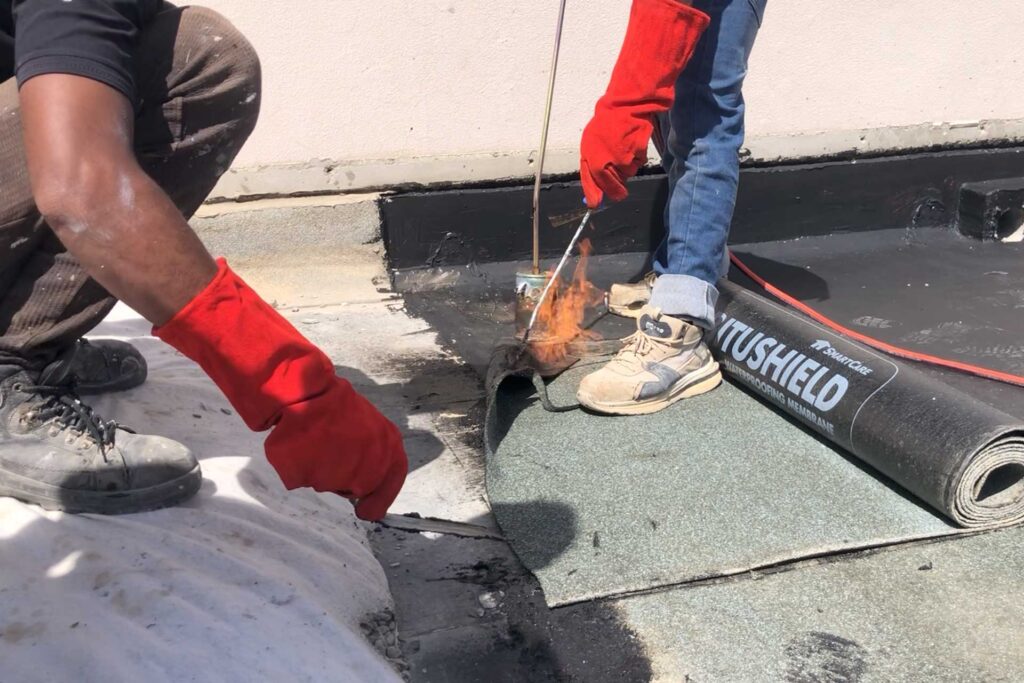
Bathroom Water Leak Repair Dubai
Villa Leak Investigation |
Waterproofing Rectification |
Flood Testing

Balcony Waterproofing Repair Dubai
Apartment Balcony Water Ingress | Drainage Repair | Waterproofing Restoration
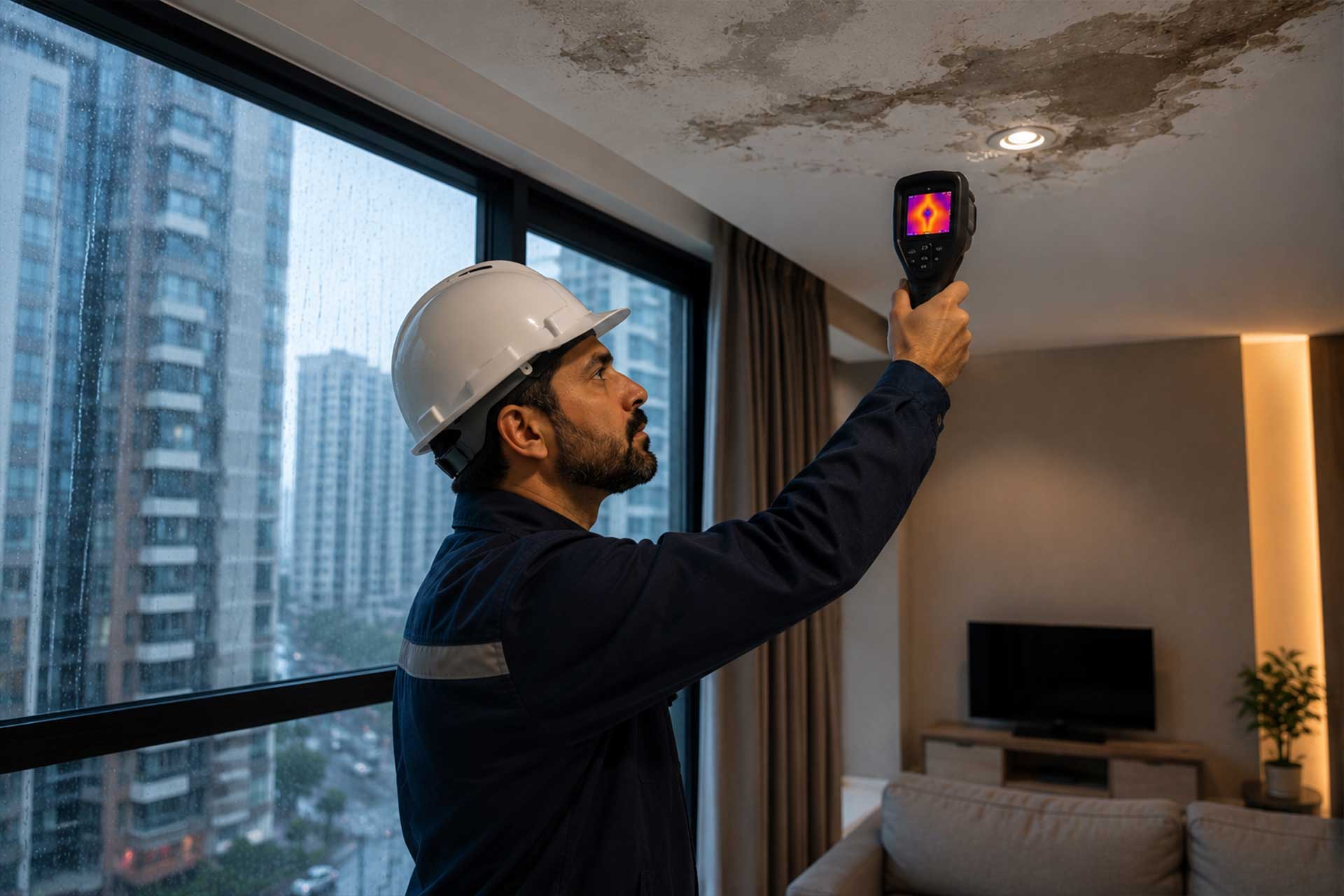
Rooftop Water Leak Investigation Dubai
Thermography Inspection |
Moisture Mapping |
Ceiling Restoration

Looking for an engineering investigation into a concealed water leak or unexplained moisture problem?
Explore our engineering solutions or speak directly with a DCX engineer.